Future of Electric Vehicles in India: Opportunities and Challenges
Electric Vehicles (EVs) are rapidly becoming an important part of India’s transportation sector. Rising fuel prices, increasing pollution, concerns about climate change, and the need to reduce dependence on imported fossil fuels are driving the country toward electric mobility.
With government support, technological advancements, increasing consumer awareness, and growing investments in EV manufacturing, India is moving toward a more sustainable and cleaner transportation system.
But while the future of EVs in India looks promising, the industry still faces several challenges, including high initial costs, limited charging infrastructure, battery technology, and dependence on critical raw materials.
Why Are Electric Vehicles Important for India?
India is one of the world's largest automobile markets. A shift from petrol and diesel vehicles toward electric vehicles can have a significant impact on the country's economy, environment, energy security, and manufacturing sector.
The Indian government has set ambitious targets for EV adoption and has introduced several policies and schemes to encourage consumers and manufacturers.
India's EV sales have grown significantly over the past few years, particularly in the two-wheeler and three-wheeler segments. This growing demand indicates that electric mobility could play a major role in India's transportation system in the coming years.
Opportunities for Electric Vehicles in India
1. Rapidly Growing EV Market
The Indian EV market is expanding rapidly. Electric two-wheelers, three-wheelers, passenger cars, buses, and commercial vehicles are increasingly becoming part of everyday transportation.
Electric two-wheelers and three-wheelers have particularly strong potential because they are widely used for daily commuting, delivery services, and last-mile transportation.
As battery prices decline and EV technology improves, more consumers are expected to consider EVs as a practical alternative to conventional vehicles.
2. Growth in EV Manufacturing
Electric mobility presents a major opportunity for India's automobile manufacturing sector.
The production of batteries, electric motors, power electronics, charging equipment, and other EV components can create new manufacturing opportunities.
Government initiatives aimed at promoting domestic manufacturing and investment can also help India become an important part of the global EV supply chain.
A stronger domestic manufacturing ecosystem could reduce India's dependence on imported components while creating opportunities for exports.
3. Battery Manufacturing Opportunities
The battery is one of the most important and expensive components of an electric vehicle.
India has significant potential to develop a domestic battery manufacturing industry. Investments in lithium-ion batteries, advanced battery technologies, battery management systems, and recycling can strengthen the country's EV ecosystem.
Emerging technologies such as solid-state batteries could further improve EV range, safety, charging speed, and overall performance in the future.
4. Expansion of Charging Infrastructure
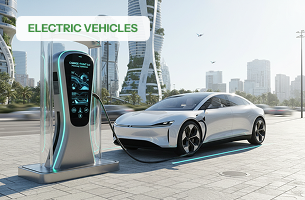
A strong charging network is essential for widespread EV adoption.
India is expanding its charging infrastructure through government initiatives and private-sector investments. Charging stations are increasingly being installed at highways, parking areas, shopping centres, offices, residential communities, and other public locations.
The expansion of charging infrastructure can create opportunities for energy companies, infrastructure developers, technology startups, and charging-service providers.
5. New Employment Opportunities
The EV industry can create employment opportunities across several sectors.
These include:
- EV manufacturing
- Battery production
- Charging infrastructure
- Software development
- Vehicle maintenance
- Battery recycling
- Research and development
- Energy management
As the industry grows, there will also be greater demand for trained EV technicians, battery engineers, software professionals, and other skilled workers.
6. Reduction in Urban Pollution
One of the major advantages of electric vehicles is that they produce no tailpipe emissions.
Greater adoption of EVs, particularly in densely populated cities, can help reduce local air pollution and improve urban air quality.
However, the overall environmental benefits of EVs also depend on how the electricity used for charging is generated. Increasing the use of renewable energy alongside EV adoption can therefore make electric mobility even more sustainable.
7. Improved Energy Security
India imports a significant portion of its crude oil requirements. The transportation sector is a major consumer of petrol and diesel.
Increasing the use of electricity for transportation could reduce India's long-term dependence on imported fossil fuels.
If EV charging is increasingly powered by solar, wind, and other renewable energy sources, electric mobility can contribute significantly to India's energy security.
Challenges Facing Electric Vehicles in India
Despite the opportunities, several challenges need to be addressed before EVs can achieve mass adoption across the country.
1. High Initial Purchase Cost
One of the biggest barriers to EV adoption is the relatively high upfront cost of many electric vehicles.
The battery pack contributes significantly to the overall price of an EV. Although EVs can offer lower running and maintenance costs, the initial purchase price remains an important concern for many consumers.
As battery technology improves and production scales up, EV prices are expected to become more competitive.
2. Limited Charging Infrastructure
Although India's charging network is growing, more infrastructure is required to support large-scale EV adoption.
Charging availability can still be a concern in smaller cities, rural areas, and on some long-distance routes.
Apart from the number of charging stations, factors such as charging speed, reliability, payment systems, and compatibility are also important.
A convenient and reliable charging network will be essential for building consumer confidence.
3. Dependence on Critical Raw Materials
EV batteries require materials such as lithium, nickel, cobalt, and other critical minerals.
Global supplies of these materials can be concentrated in a limited number of countries, creating potential supply-chain risks.
India will need to strengthen domestic capabilities in battery manufacturing, mineral processing, recycling, and alternative battery technologies to reduce these risks.
4. Battery Safety
Battery safety is another important concern in the EV industry.
Issues such as battery overheating and thermal runaway can create safety risks if batteries are poorly designed, manufactured, or maintained.
Manufacturers therefore need to focus on advanced battery management systems, thermal management, safety testing, and strict quality standards.
5. Range Anxiety
Range anxiety refers to the fear that an EV may run out of battery before reaching a charging station.
This remains a concern for some potential EV buyers, particularly those who frequently travel long distances.
Improved battery ranges, faster charging, better navigation systems, and a wider charging network can help reduce range anxiety.
6. Lack of Skilled Workforce
EV technology is different from traditional internal-combustion-engine vehicles.
Electric vehicles use high-voltage battery systems, electric motors, power electronics, advanced software, and sophisticated control systems.
As a result, automobile technicians and mechanics need specialized EV training.
Developing a skilled workforce will be essential for the long-term growth of India's electric mobility industry.
Government Initiatives Supporting EV Adoption
The Indian government has introduced several initiatives to encourage electric mobility.
The FAME-II scheme played an important role in supporting electric vehicles and charging infrastructure. It was followed by the PM E-DRIVE scheme, which aims to promote EV adoption, charging infrastructure, and the development of India's EV manufacturing ecosystem.
Government policies have also focused on domestic manufacturing, battery production, and investment in the EV sector.
Such initiatives can help reduce the cost of EVs, encourage manufacturers to invest in India, and accelerate the development of the country's electric mobility ecosystem.
The Future of EVs and the Indian Automobile Industry
The future of electric vehicles in India is not limited to electric cars and scooters. It represents a broader transformation of the automobile and energy industries.
Software will play an increasingly important role in future EVs. Connected vehicles, over-the-air software updates, intelligent battery management, smart charging, and advanced driver-assistance systems are likely to become more common.
The EV ecosystem will also bring automobile manufacturers, battery companies, energy providers, technology startups, software developers, and charging companies closer together.
India has an opportunity to become more than just a large EV consumer. With the right investments and policies, the country can become a major global hub for EVs, batteries, components, and related technologies.
Conclusion
The future of Electric Vehicles in India is highly promising. EVs can help the country reduce pollution, improve energy security, create new employment opportunities, encourage domestic manufacturing, and support a more sustainable transportation system.
However, achieving mass EV adoption will require more than simply increasing vehicle sales. India must also focus on affordable EVs, reliable charging infrastructure, safe and advanced batteries, domestic manufacturing, skilled workers, and efficient battery recycling.
With cooperation between the government, automobile manufacturers, technology companies, energy providers, and consumers, India has the potential to become a global leader in electric mobility.
The future of electric vehicles in India is not simply about replacing petrol and diesel vehicles with electric ones. It is about building a cleaner, smarter, more sustainable, and technologically advanced transportation ecosystem.